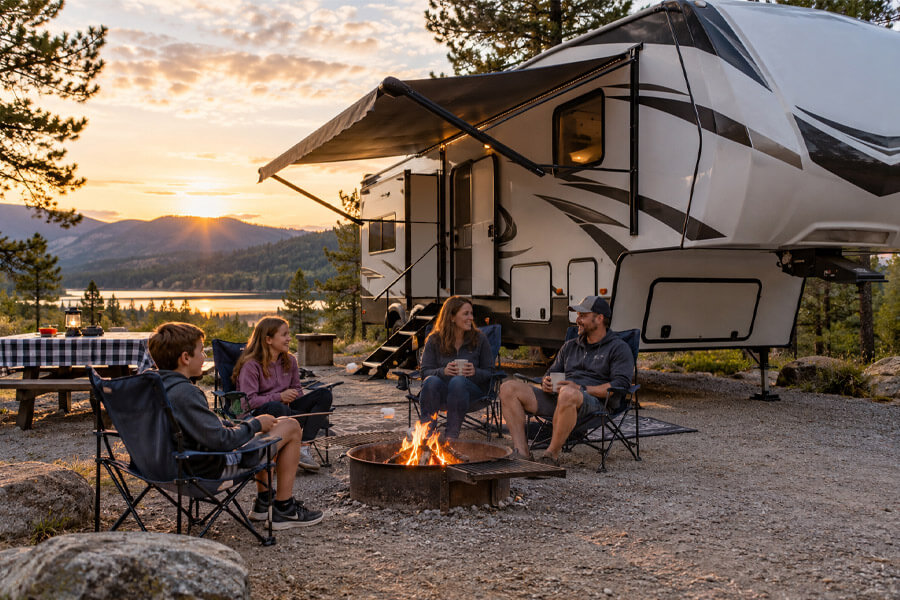
Parents often hear some version of the same reminder: You only get so many summers with your kids.
For Hailey Warner, that thought was powerful enough to change the direction of her family’s life.
After seeing a video reminding parents that they get only 18 summers with their children, Hailey and her husband decided they wanted to make the most of them. They sold nearly everything, bought an RV and hit the road with their three children.
Nearly five years later, their family has Workamped at an amusement park in Kentucky, campgrounds in Wisconsin and Tennessee, the sugar beet harvest and a Jellystone Park in Texas. Workamping helped make those years of family travel financially possible.
Their story isn’t unique. Families across the country are discovering that Workamping can provide a way to combine travel, work and family life while experiencing places they might otherwise only visit during a weeklong vacation.
It isn’t necessarily an easier way to live. Raising children in an RV brings challenges of its own. But for the right family, it can provide something that’s increasingly difficult to find in everyday life: more time together and more opportunities to experience the world together.
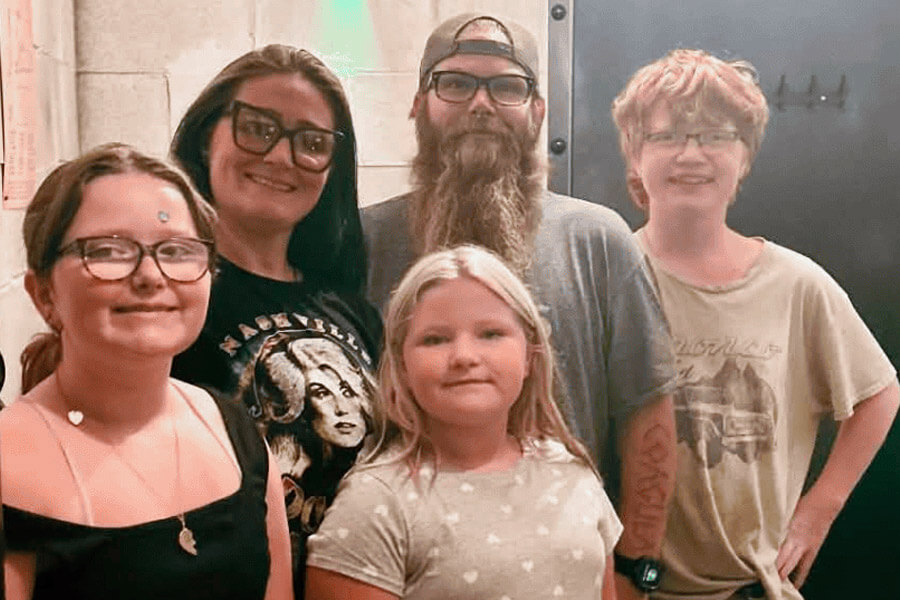
Listen to Hailey’s story in episode 401 of The Workamper Show podcast
Family Time Looks Different on the Road
Traditional family life can get busy quickly. Parents work, kids go to school, activities fill the evenings and weekends, and vacations have to fit within whatever time remains.
Living and Workamping in an RV doesn’t eliminate schedules or responsibilities, but it can change the way families spend their time.
A Workamping assignment might allow a family to spend several months near a national park, lake, mountain town or other destination. Instead of trying to squeeze everything into a few vacation days, families can explore on their days off and gradually become familiar with the surrounding area.
Even ordinary moments can become part of the adventure. A family might spend one weekend hiking a national park trail, another exploring a nearby historic site and the next simply sitting around a campground with people they recently met.
Over time, those shared experiences can become one of the most rewarding parts of life on the road.
How Workamping Can Make Family RV Travel More Affordable
Traveling the country in an RV isn’t cheap, and the costs can add up even faster when traveling as a family. Campground fees alone can consume a substantial portion of a family’s travel budget, especially during extended stays in popular destinations.
That’s one reason Workamping can be particularly appealing to families.
Depending on the position, Workampers may receive wages, an RV site or some combination of compensation and benefits. Reducing or eliminating campground expenses while earning income can make it possible to remain on the road much longer than a traditional vacation budget would allow.
That’s exactly what Hailey Warner discovered. Workamping helped make her family’s years of travel more affordable while giving them opportunities to experience very different parts of the country.
Along the way, Hailey has worked in roles ranging from housekeeping and front desk duties to bartending and leading activities. She eventually became an activities director, and her older children have even gained some Workamping experience of their own.
Families don’t necessarily need an expensive RV or a perfect plan before getting started, either. Hailey’s advice to other families is to start small, avoid overcomplicating things and connect with other Workamping families who can share what they’ve learned.
Homeschooling and Roadschooling While Workamping
For families who homeschool or roadschool, travel can add an entirely different dimension to education.
History looks different when you’re standing where it happened. Science takes on new meaning while exploring a national park, watching wildlife or learning about a region’s geology.
Geography becomes more tangible when children experience the landscapes, climates and cultures of different parts of the country firsthand.
Beckie and Randy Martin experienced that with their two daughters while Workamping and traveling across America.
Beckie had already been homeschooling her children before the family began RVing full-time. But visiting historic sites and natural wonders gave their education a new dimension.
Workamping also became part of the experience. At some assignments, everyone in the family was able to participate in some capacity, from picking up trash around a lake to helping in a campground cafeteria. One campground hired their teenage daughter as a regular employee while their younger daughter helped make tie-dye shirts for an hour each week.
The Martins also appreciated employers who arranged schedules so everyone could have the same two days off. They could use one day to recharge and another to explore their temporary home together.
Not every lesson children learn on the road will be from a textbook. They may also learn how to adapt when plans change, interact with people of different ages and backgrounds, take responsibility for chores and navigate life with fewer possessions.
Those are valuable, real-world lessons for a child to learn.
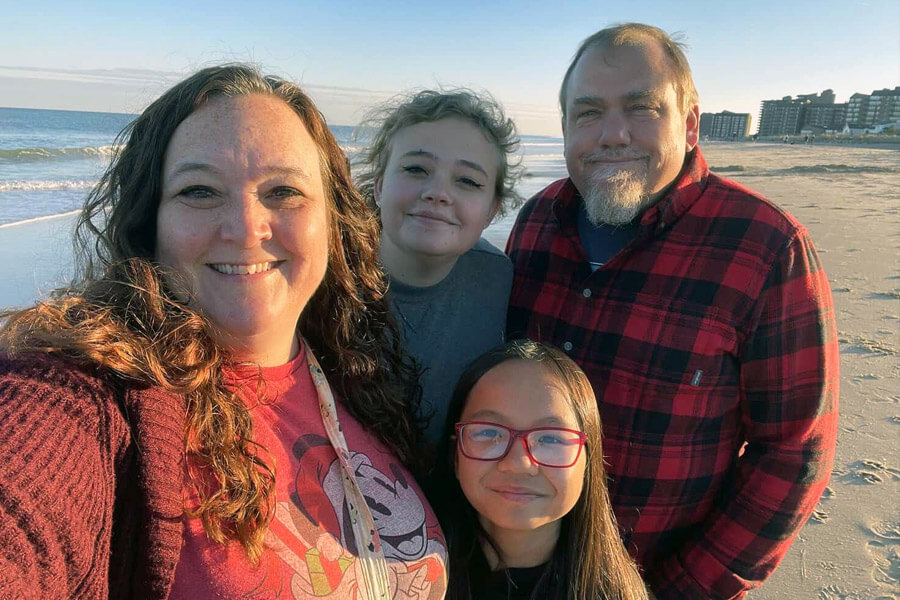
Listen to the Martin’s story in episode 201 of The Workamper Show podcast
How Do Kids Make Friends While RVing Full-Time?
One of the first concerns parents may have about traveling with children is how they’ll make and maintain friendships when their address keeps changing.
It’s a legitimate consideration, and every child is different.
But traveling families often discover that community doesn’t necessarily require staying in one place.
Single father Brandon Bowles has traveled full-time for six years with his son and daughter. Workamping provided income during their earlier years on the road, and the family has since explored national parks, cliff dwellings and the mountains of Colorado together.
For Brandon’s children, making a new friend can sometimes be as simple as spotting bicycles at another campsite. His kids have learned to make connections wherever they happen to be, while their years of travel have also helped them become comfortable adapting to change.
The Martins found another solution. Their daughters maintained relationships with longtime friends online while also meeting other traveling children. Staying at campgrounds popular with full-time RV families helped them develop friendships with people they would later meet again in other states.
For some children, constantly meeting new people can be exciting. Others may need more consistency and time to adjust.
That’s one reason parents should consider the personalities and needs of each child rather than assuming the lifestyle will affect everyone the same way.
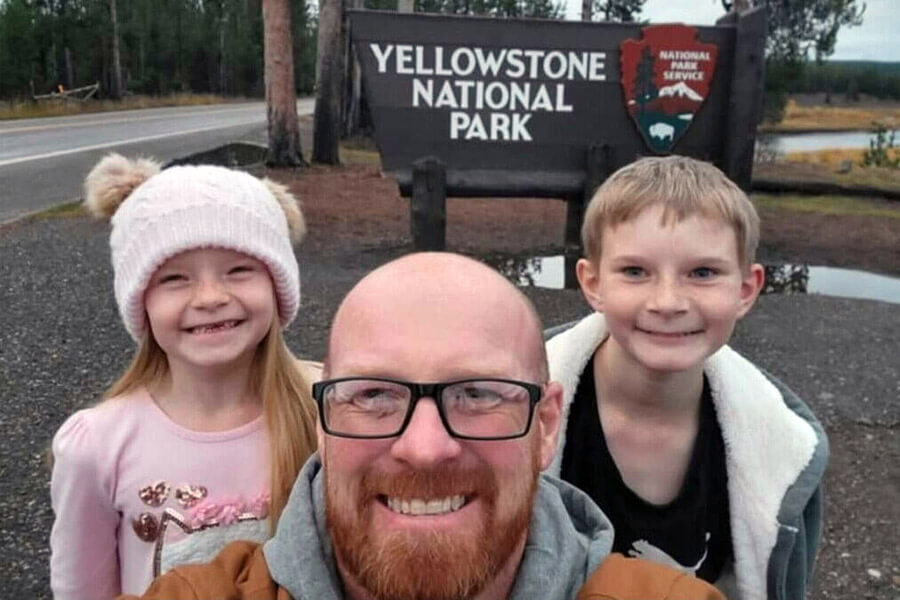
Listen to Brandon’s story in episode 354 of The Workamper Show podcast
Family Workamping Doesn’t Look the Same for Everyone
There isn’t one correct way to Workamp as a family.
Some families travel with toddlers. Others have teenagers. Some homeschool while others arrange their travels around different educational needs. Both parents might Workamp, one parent might work while the other focuses on the children, or the family may combine Workamping with remote work or a small business.
Brandon’s experience is a good reminder that the lifestyle isn’t limited to couples, either. As a single father, he used Workamping during his family’s earlier years of travel and later developed skills as an RV technician, giving him another way to earn income while remaining mobile.
Older children may sometimes have opportunities to work as well, but employers have different requirements and not every position or workplace will be appropriate for children.
That’s why families need to evaluate more than the job description. A great Workamping opportunity for a retired couple may be a poor fit for parents traveling with three children.
Before accepting a position, parents should understand the work schedule, campsite arrangements, surrounding area and employer expectations while making sure the opportunity works for the whole family.
The Challenges of Workamping With Kids
Pictures of smiling kids in national parks don’t tell the entire story.
Living together in a relatively small RV requires patience. Parents still have to work. Kids still have bad days. RVs break. Travel plans change. Weather doesn’t cooperate. Families may occasionally struggle to find friends, privacy or enough space to get away from each other.
Even families who loved full-time RVing have lessons they would apply differently the next time around.
Garrett and Carolyn Syfrett spent more than six years traveling full-time with their three children. They visited dozens of states and national parks while roadschooling along the way, and Garrett credits those years with providing experiences and educational opportunities his children otherwise might never have had.
But Garrett also encourages parents to enter the lifestyle with their eyes open.
He recommends considering each child’s personality and interests when deciding whether full-time RV travel is a good fit. His children were already homeschooled and accustomed to spending considerable time together before the family began traveling, which helped them adapt. A child accustomed to a highly structured environment or an established social circle may experience the transition differently.
Garrett also says that, if circumstances allow, he would encourage families to consider keeping their house rather than immediately selling everything. When the Syfretts eventually came off the road, they had to start over from scratch.
Those kinds of experiences are important because family Workamping shouldn’t be presented as an endless vacation. It’s a lifestyle, complete with tradeoffs.
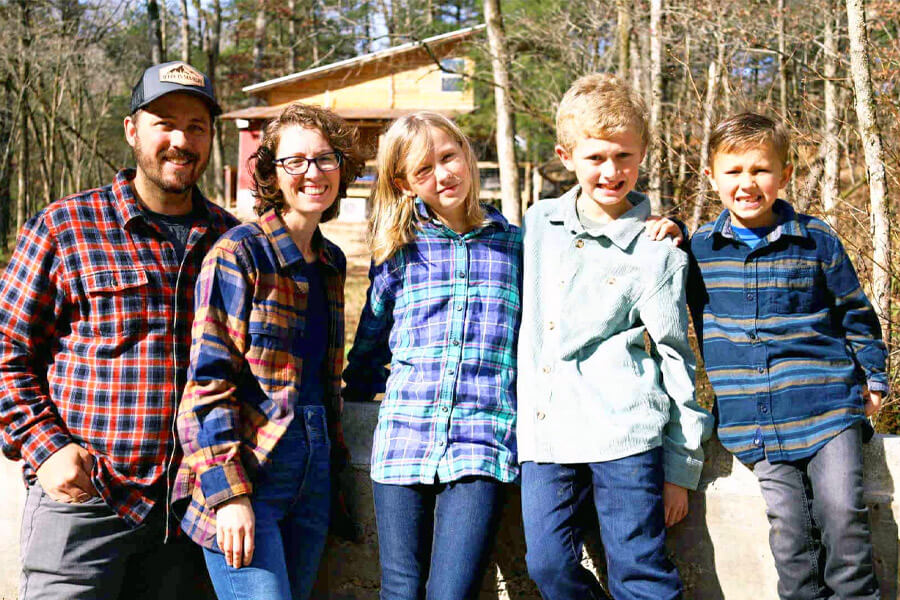
Listen to the Syfrett’s story in episode 345 of The Workamper Show podcast
Is Workamping With Kids Right for Your Family?
The better question may not be whether Workamping with kids is possible. Plenty of families have demonstrated that it is.
The question is whether it’s a good fit for your family.
Think about how everyone handles change, close quarters and uncertainty. Consider how your children will continue their education and maintain important relationships. Talk about what everyone hopes to experience and what they would be giving up.
And think realistically about work.
Workamping isn’t a vacation where someone occasionally asks you to help around the campground. An employer is counting on you to perform the job you agreed to do. Parents need a plan that allows them to meet those responsibilities while still caring for their children.
Finding the right opportunity may require more searching and more questions than it would for a solo Workamper or retired couple. That’s okay. The goal isn’t to find just any Workamping job. It’s to find one that works for your family.
Getting Started With Family Workamping
Perhaps one of the most encouraging lessons from families who have already done this is that few of them started with everything perfectly planned.
They learned as they went.
They changed RVs, tried different jobs, discovered which types of campgrounds worked best for their children and adjusted their plans as their families changed.
For Hailey Warner, looking back after nearly five years of family Workamping, the thing she would change isn’t buying a different RV or developing a more elaborate plan.
She wishes they had started sooner.
That doesn’t mean every family should sell the house tomorrow and hit the road. But if the idea of traveling with your children keeps resurfacing, it may be worth exploring what’s possible.
Childhood doesn’t wait for the perfect RV, the perfect job or the perfect time.
Workamping can give families a way to earn income, reduce some of the costs of extended travel and spend a season living somewhere they might otherwise only dream about visiting.
For some families, it may be one summer they’ll always remember.
For others, that first summer may be just the beginning.



Leave a Reply