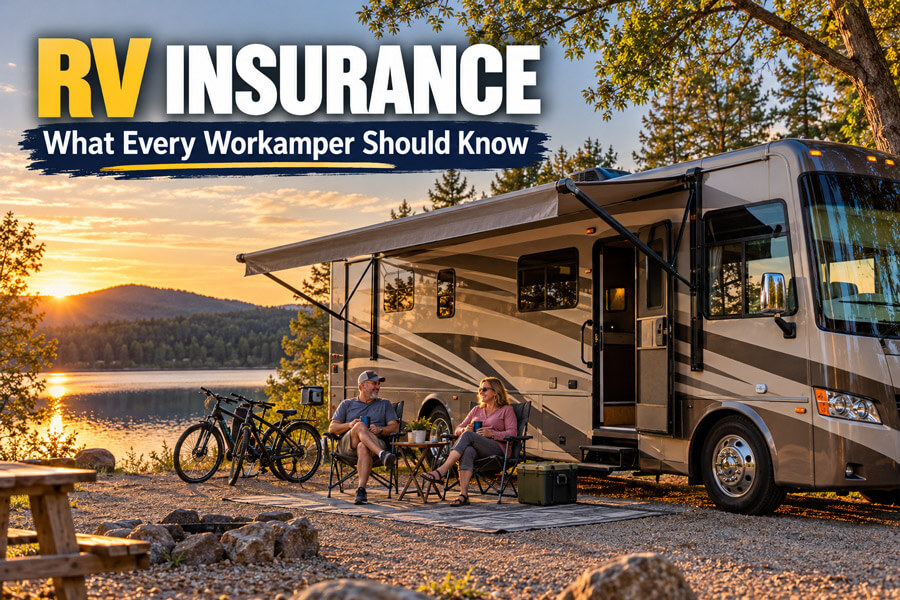
For Workampers, an RV is much more than something used for camping a few weekends each year. It may be their full-time home, their transportation between jobs, or their office, as well as the place they keep most of their possessions.
That creates insurance needs that can be considerably different from those of a recreational RVer.
A basic insurance policy may be perfectly adequate for someone who pulls a travel trailer to a campground several times each summer. But a Workamper who lives in an RV most of the year, moves between states, and spends months at seasonal jobs may need additional protection.
The key is making sure the insurance company understands how the RV is actually being used.
What Makes RV Insurance Different from Auto Insurance?
An RV occupies an unusual position in the insurance world because it can function as a vehicle and a residence.
When traveling down the highway, a motorhome presents many of the same risks as a car or truck. But, when parked at a campground for several months, it functions more like a home.
That is why specialized RV insurance can combine features commonly associated with auto, homeowners, and personal property insurance.
For example, collision coverage may help repair an RV damaged in an accident. Comprehensive coverage generally protects against things such as theft, vandalism, fire, weather damage, and other covered losses unrelated to a collision.
However, RV policies can also provide protection when someone is injured at the campsite or when personal belongings are stolen or damaged. Those are situations traditional auto insurance generally does not cover.
RV Insurance Coverage Workampers Should Consider
RV insurance policies vary by company and domicile state, so there is no single package appropriate for everyone. However, Workampers should understand several common types of coverage.
Collision coverage generally pays for damage to the insured RV resulting from a collision with another vehicle or object based on the policy’s deductible and limits.
Comprehensive coverage generally covers losses caused by things other than collisions. Those may include theft, vandalism, fire, storms, falling objects and animal damage.
Liability coverage generally protects against injuries or property damage for which the insured is legally responsible. Motorhomes generally require vehicle liability insurance just as automobiles do.
Uninsured and underinsured motorist coverage can provide protection when an accident is caused by someone who has no insurance or insufficient coverage.
Medical payments coverage may help with medical expenses for the policyholder and passengers following an accident. Full-time policies may also provide protection when visitors are injured in or around a parked RV.
Personal belongings or personal effects coverage may protect possessions you travel with in your RV. Coverage limits deserve special attention because Workampers can accumulate thousands of dollars worth of equipment.
Emergency expense coverage may reimburse expenses such as lodging and transportation when a covered loss leaves the RV temporarily uninhabitable.
Vacation liability may provide protection when someone is injured in or around an RV while it is being used as a temporary residence. Full-time RVers may need broader full-timer liability coverage instead.
Roadside assistance can be especially valuable for Workampers because towing a large motorhome or fifth wheel requires specialized equipment. Policies vary considerably regarding towing distances and covered services.
Full-Time vs. Part-Time RV Insurance
One of the most important questions Workampers should answer is whether their insurance company considers them to be recreational, seasonal or full-time RVers.
Someone who uses an RV for occasional vacations will generally have different insurance needs than someone living in the unit most of the year.
Many insurers consider people to be full-time RVers when the RV serves as their primary residence for more than six months each year. Full-time coverage can add protections similar to those found in homeowners policies, including broader personal liability and medical payments coverage.
That distinction can be particularly important for Workampers who no longer maintain a traditional house or apartment.
If the RV is your primary residence, simply renewing the same recreational policy you purchased years earlier may leave important gaps in coverage. Tell the insurance agent how many months you live in the RV and whether you maintain another permanent residence.
Does Workamping Affect Your RV Insurance?
Workamping itself does not automatically mean an RV owner needs an entirely different type of policy. However, the way Workampers use their RVs can affect their insurance needs.
A Workamper might spend four months living at a campground in Maine, move to Arizona for the winter, and then spend several weeks traveling before beginning another job.
Some Workampers receive a campsite in exchange for working several hours each week. Others perform paid jobs, operate businesses, volunteer or work remotely from their RVs.
Those situations are good reasons to have a detailed conversation with an insurance agent.
Explain that you Workamp and describe what that involves. Ask specifically whether spending several months at a work location changes coverage and whether working in exchange for a campsite creates any exclusions.
People operating a business from an RV should also ask whether business equipment or business-related liability requires separate coverage.
Never assume the insurance company understands your lifestyle simply because the policy lists an RV as the insured vehicle.
RV Insurance for Tow Vehicles, Toads and Trailers
Owning an RV often means insuring more than one vehicle.
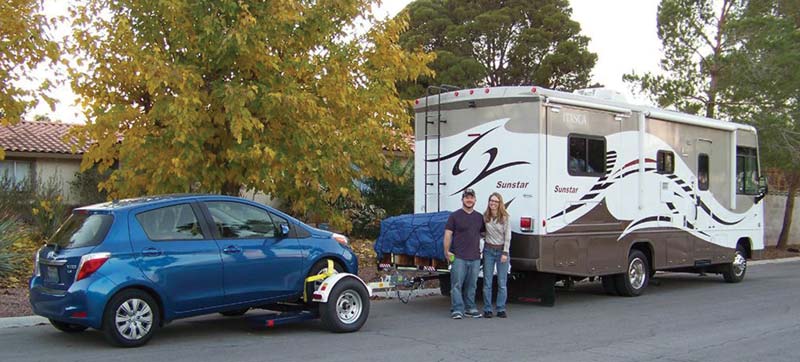
Motorhome owners frequently tow a car, often called a “toad.” That vehicle normally needs its own auto insurance policy. Do not assume the motorhome policy automatically provides coverage for the car simply because it is being towed.
For travel trailer and fifth-wheel owners, liability coverage while towing generally comes from the tow vehicle’s auto policy, while a separate RV policy can protect the trailer itself against physical damage and other covered losses.
Workampers should also ask about expensive equipment connecting the two vehicles. That can include tow bars, braking systems, fifth-wheel hitches and other accessories.
The same applies to permanently attached equipment on the RV. Awnings, satellite systems and solar installations may be covered differently depending upon the insurer and policy.
Don’t Overlook Personal Property Coverage
It’s easy to underestimate the value of everything Workampers carry with them.
Walk through an RV and start adding up the replacement cost of laptops, tablets, televisions, cameras, clothing and kitchen equipment. Then look outside.
Many Workampers also travel with e-bikes, generators, tools, grills, outdoor furniture and other expensive equipment. Permanently installed solar equipment can represent thousands of dollars by itself.
A policy may provide personal property coverage, but that does not mean every possession is automatically protected for its full replacement value.
Check the overall coverage limit along with any special limits or exclusions that apply to individual categories of property. High-value electronics, jewelry, photography equipment and business equipment may require additional protection.
It is also worth asking whether claims are settled using actual cash value, which factors in depreciation, or replacement cost.
Workampers should periodically photograph their RV’s contents and keep receipts for expensive purchases. Store copies somewhere other than inside the RV so the records remain available if the entire unit is destroyed or stolen.
Ways to Save on RV Insurance
Specialized coverage does not necessarily mean paying the highest possible premium.
Some insurers offer discounts for bundling an RV with a car or truck. Safe driving histories, paying policies in full and equipping an RV with certain safety devices may also reduce premiums.
Workampers who store an RV for part of the year should ask whether their insurer offers a storage option that reduces some coverage while the unit is not being used.
Membership in certain RV organizations may qualify policyholders for discounts with some insurers as well.
However, never reduce coverage simply to obtain a lower premium without understanding what protection is being eliminated.
Where to Shop for Full-Time RV Insurance
Not every company offers the same RV coverage in every state. Workampers should compare policies rather than simply comparing premiums.
Several companies currently market specialized RV or full-time coverage.
- Progressive offers specialized RV policies and optional full-timer protections, including personal liability, medical payments and loss assessment coverage for people using an RV as a permanent residence.
- National General offers specialized RV coverage with options for full-timers, personal belongings, permanent attachments, roadside assistance and emergency expenses.
- Foremost offers RV-specific policies and additional liability coverage for people living in their RVs year-round.
- Roamly specializes in insurance for RVs and other recreational vehicles. The company says its full-timer package can include liability, medical, storage and loss assessment coverage. Roamly operates as an insurance agency and may place policies with several insurance carriers.
- Good Sam also operates an insurance agency serving RV owners and can help shoppers compare specialized RV coverage.
Availability, eligibility, limits and policy terms vary by insurer and state, so these companies should be viewed as starting points for comparison rather than recommendations.
Questions to Ask Before Buying RV Insurance
Shopping for RV insurance should involve more than asking, “How much will this cost?”
Before choosing or renewing a policy, ask:
- Does the company consider me a full-time RVer based on how many months I live in the RV?
- Are my personal belongings covered and what is the coverage limit?
- Are belongings covered at replacement cost or depreciated value?
- Does the policy cover laptops, cameras, e-bikes, generators and tools?
- Do I need additional coverage for equipment used for work or a business?
- Is roadside assistance included, what services are covered and how far will the RV be towed?
- What emergency expenses are covered if my RV becomes uninhabitable?
- Are solar panels, awnings and other permanently attached accessories covered?
- Does my liability protection apply while the RV is parked for several months?
- Does Workamping or receiving a campsite in exchange for labor affect coverage?
- What happens when I Workamp or travel in another state?
- Is my tow vehicle or towed vehicle covered separately?
- How would the company determine the value of my RV following a total loss?
- Are there exclusions that are especially important for full-time RVers?
The answers should come from the insurer or licensed agent and, whenever possible, be confirmed in the policy documents.
Protect the Lifestyle, Not Just the RV
For Workampers, the financial impact of losing or seriously damaging an RV can extend far beyond the vehicle itself. When an RV also serves as a home, transportation, office and storage space, a serious accident, fire, storm or theft can quickly become much more than an insurance claim.
That makes periodically reviewing insurance coverage especially important when circumstances change. Someone who purchased an RV for weekend trips may eventually start traveling six months each year before becoming a full-time Workamper.
A conversation with an insurance professional before your next Workamping adventure can help identify gaps in coverage before they turn into costly surprises.
Remember, the goal is not necessarily to buy the most expensive policy or every optional coverage available – it’s to understand what you own, how you use it and what would happen financially if something went seriously wrong.



Leave a Reply