
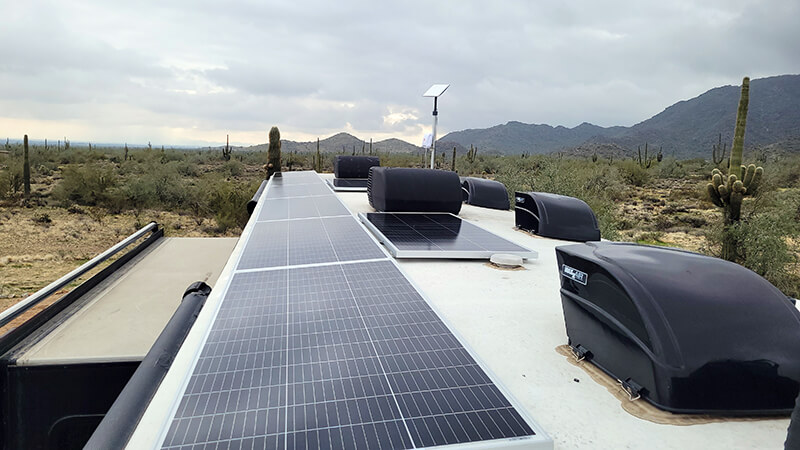
When Justin Mowery and Nick Sauble first started tinkering with solar power systems on their own RVs, it was just a side project that was born out of curiosity and a desire to camp off-grid.
That hobby soon grew into a full-time business. Today, RV Solar Concepts, a mobile RV solar installation company based in Buckeye, Arizona, helps fellow RVers and Workampers gain the freedom and flexibility that solar energy provides.
“We never set out to build a company,” said Nick. “It started with picking up inexpensive panels from a company across town and selling them online. Pretty soon, people started asking if we installed them, too. That sparked the idea.”
With backgrounds in electronics as Navy fire controlmen and later as instrument techs at the Palo Verde Nuclear Generating Station, Justin and Nick had the technical skills needed to build reliable, custom solar systems. After testing setups on their own rigs, they began offering installations for others and by the time the COVID-19 RV boom hit, RV Solar Concepts was already thriving.
“Everyone suddenly wanted to get outside and boondock,” Justin said. “We went full time, and it’s been busy ever since.”
Why RVers Are Turning to Solar
For many RVers, especially Workampers who stay in remote locations or prefer dry camping, solar power is a game-changer. Even a basic setup keeps lights, fans, and propane fridges running without a noisy generator.
“There’s really no RV that shouldn’t have at least a small solar system to keep the batteries charged for daily 12-volt use,” Nick explained.
Justin added:
“Once they get that basic system in place, they come back for upgrades. They want more panels so they can power more stuff and stay out longer.”
Start With Your Power Goals
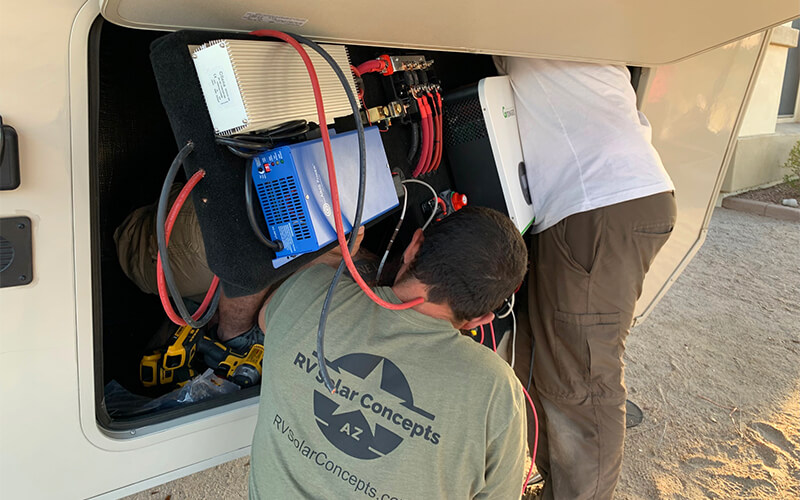
Before designing any RV solar system, Justin and Nick always ask: What are your energy goals?
- Some RVers just want to keep batteries topped off for basic use.
- Others dream of running everything in the RV, including both air conditioners.
While a full energy audit is ideal, even a short conversation about where and how you camp makes a big difference. Factors like location, season, and sun exposure all impact performance.
“People think 400 watts will do everything,” Nick said. “That might be true in the Southwest, but not up north in the fall.”
Key Components of an RV Solar Setup
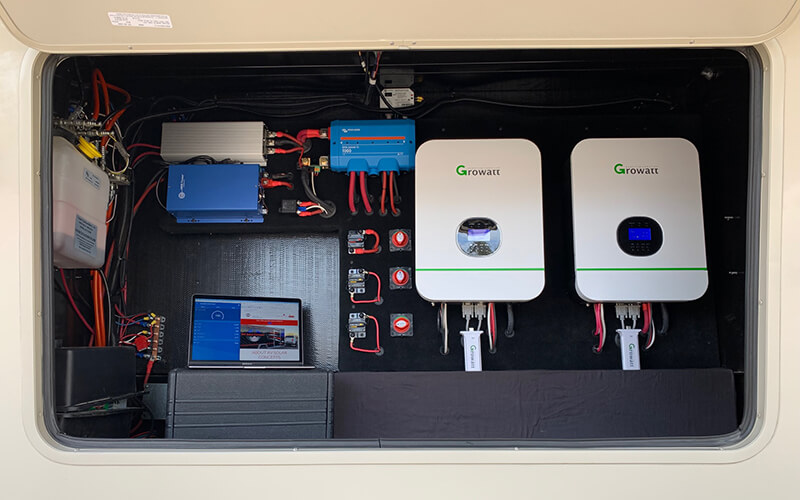
At its core, every RV solar power system needs:
- Solar panels – capture energy from the sun
- Charge controller – regulates energy flowing into batteries
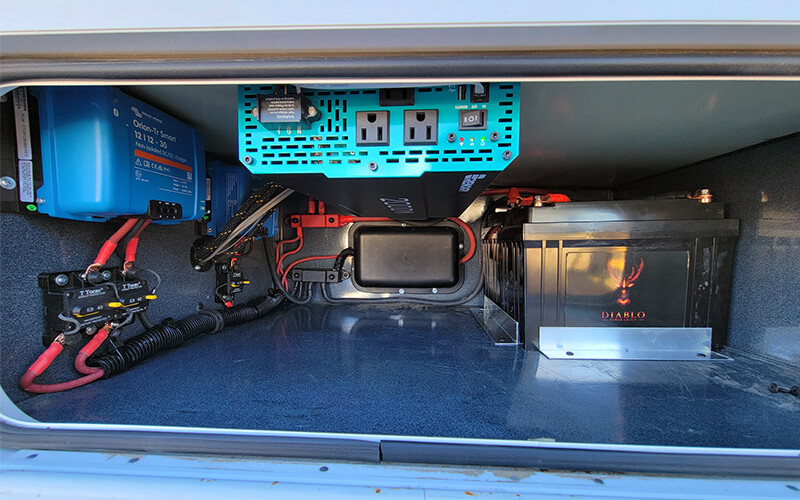
- Batteries – store power for use later
- Inverter – converts stored energy into 120V electricity for appliances
Pro tips from RV Solar Concepts:
- Choose MPPT charge controllers (maximum power point tracking) over cheaper PWM (pulse width modulation) versions. They’re more efficient and flexible.
- Install a 2,000-watt pure sine wave inverter if you want to run outlets, microwaves, or CPAP machines.
“Without an inverter, you’re stuck running a generator all night just for a 50-watt CPAP load,” Justin noted.
What About the Batteries?
While many RVs come with basic starter batteries, upgrading to better deep-cycle options makes a big difference.
- Lead-acid option: GC2 golf cart batteries are tougher than standard Group 24 or 27 models found on many rigs.
- Best option: Lithium batteries—lighter, maintenance-free, longer lifespan, and usually backed by a 10-year warranty.
“Lithium is quickly becoming the gold standard for RV use,” Nick explained. “Most are rated for 3,000 cycles—that’s basically a lifetime for RVers.”
Although lithium batteries used to be expensive, competition has driven prices down significantly. Nick noted that some budget lithium options on Amazon are now under $150, although RV Solar Concepts doesn’t endorse or install those brands.
How Much Does RV Solar Cost?
Pricing varies depending on the system size, but a typical package from RV Solar Concepts includes solar panels, an inverter and installation.
Most customers also want an inverter so they can use outlets and appliances. Nick explained that the inverter installation alone costs $2,200, and the solar side ranges from $2,500 to $3,000, depending upon the number of panels.
“Our base setup with 600 to 800 watts of solar and a 2,000-watt inverter runs between $4,000 and $6,000,” said Justin. “That doesn’t include the lithium batteries, but we often install those too.”
“If someone wants to run air conditioning, they’ll need a much bigger system,” he said. “An air conditioner uses 1,200 to 1,500 watts, so you’d need at least 2,000 watts of solar just to keep up.”
Portable & Tilting Solar Panels
For small trailers or shaded campgrounds, portable solar suitcases can be a smart addition. These plug-in panels can be positioned in sunny spots away from the RV, making them ideal for places with tree cover.
“They’re great for rigs that only have room for one or two roof panels,” said Justin. “We’ll often install a connection on the trailer tongue for an easy plug-in setup.”
Tilting roof-mounted panels can also improve solar efficiency by up to 20 percent, especially in the winter when the sun is low in the sky. However, Nick warned that manual tilting brackets can be a hassle.
“Most people only use them a couple of times before deciding it’s too much work,” he said. “But if you’re parked for months at a time, like many Workampers, it might be worth considering.”
Choosing a Reliable RV Solar Installer
Justin and Nick often fix botched installs from other companies. Their advice:
- Check reviews and ask for photos of past work.
- Avoid big deposits for small jobs.
- Test everything before paying in full.
“If someone asks for a big deposit up front for a small job, that’s a red flag,” Justin said.
RV Solar Concepts does not require a deposit for most of its installation projects, he added. For large systems, they may request a small down payment, but customers only pay in full once the install is complete.
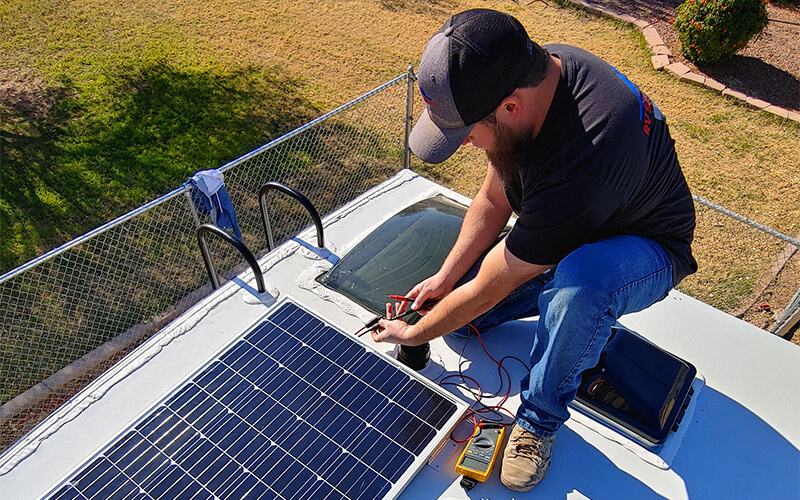
Serving Workampers Nationwide
Although based near Phoenix, RV Solar Concepts is fully mobile. They frequently work with snowbirds and Workampers visiting Arizona.
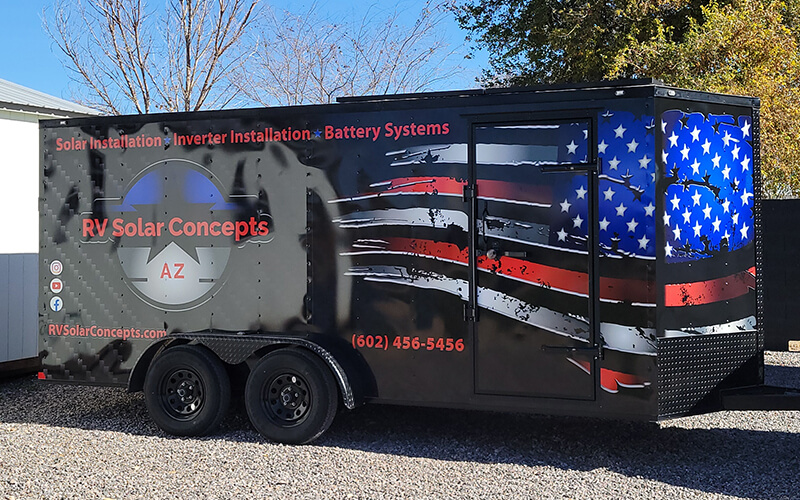
“Our business is set up in an area specifically designed for customers to bring their rigs to us for installs,” said Justin.
- Most installs are done in a single day.
- They can also do on-site installs at campgrounds or storage facilities (with owner permission).
DIY RV Solar Installs
For RVers who prefer the do-it-yourself route, Justin and Nick share their knowledge on the RV Solar Concepts YouTube channel, which offers free training and tutorials.
“We’re sharing what we’ve learned with people who might not have the budget to hire a pro,” said Nick. “All our content is free—you’re just paying with your attention.”
Learn more at rvsolarconcepts.com, or find them on Facebook, Instagram, and YouTube.
[Update 3/5/2026 – RV Solar Concepts is no longer in business and their youtube channel is no longer available.]
Final Thoughts
Whether you want to boondock in silence, keep your medical devices running overnight, or simply cut back on generator use, RV solar power can transform your RV lifestyle. For Workampers in particular, it means greater freedom, quieter nights, and longer stays in the places they love most.



Leave a Reply