
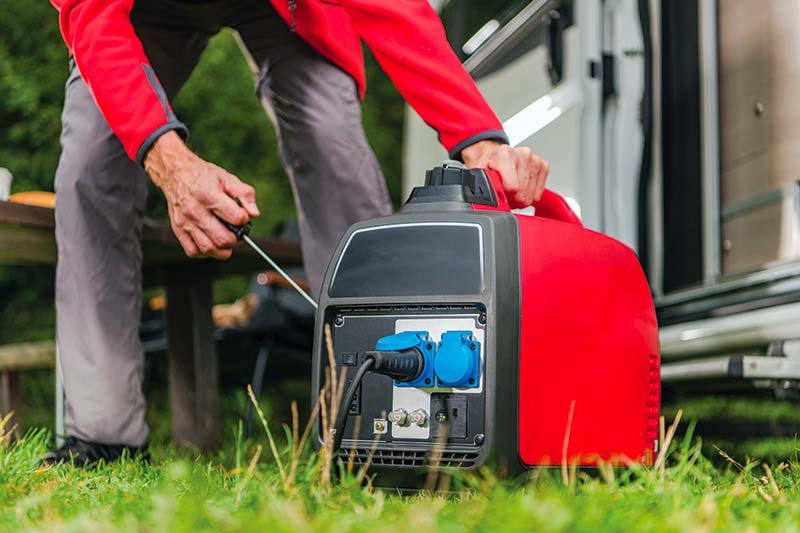
Generators are tremendously helpful devices for keeping RVs powered up in all kinds of situations, whether making a meal at a rest stop or controlling indoor temperatures when boondocking.
But like any engine, it needs regular attention to stay reliable. With a few simple habits, you can make sure your generator is ready whenever you need it.
Because generators aren’t typically used every day, they are often taken for granted. Many RVers discover problems with their generators only when they need them most. It’s for that reason that preventative maintenance must be performed.
Chris Wilson, an instructor specializing in generators at the National RV Training Academy (NRVTA) in Athens, Texas, offers some easy suggestions for to keep generators in tip-top shape.
How Will the Generator Be Used?
Most fifth wheels and motorhomes comes with built-in generators capable of creating enough power to operate appliances, heaters and air conditioners whenever necessary. However, travel trailers sometimes rely on portable generators to provide power on a temporary basis.
Chris said it is important to look at how a travel trailer will be used to determine the type of generator needed. People who only require power from time-to-time will be able to use a portable generator. However, RVers who plan to boondock for extended periods of time, or who may need continuous power to run vital equipment, like oxygen devices, would be better off installing a built-in generator.
“Generally, built-in generators are a little heavier duty and are made to run continuously for long periods of time,” he explained. “A lot of portable generators have a duty cycle which requires users to cool them down for a certain period of time, often the same amount of time the generator was used.”
Ask About the Generator when Buying an RV
When purchasing a used RV, Chris said it is vitally important that you ask for service records pertaining to the generator itself.
“We find a lot of RV owners don’t service their generator as often as it should be,” Chris explained.
“We see this happen when people visit a place with no electrical hookups and run their generator for a week or 10 days straight, day and night,” he explained. “Doing so take the generator way beyond the interval for which it needs service. Then, when they get home, the RVer often forgets to get the generator serviced.”
Another common problem occurs when RVs are parked for long periods of time, such as between seasons. In those situations, fuel in the generator tends to go bad, which causes a whole bunch of problems, said Chris.
“A lot of it depends upon the quality of the gas that was purchased as well as the quantity,” he explained. “The gas deteriorates more quickly in places like the carburetor or fuel lines. It is not uncommon for a generator to have bad gas in it even when the RV’s 80-gallon fuel tank is full with good gas.”
Exercise the Generator
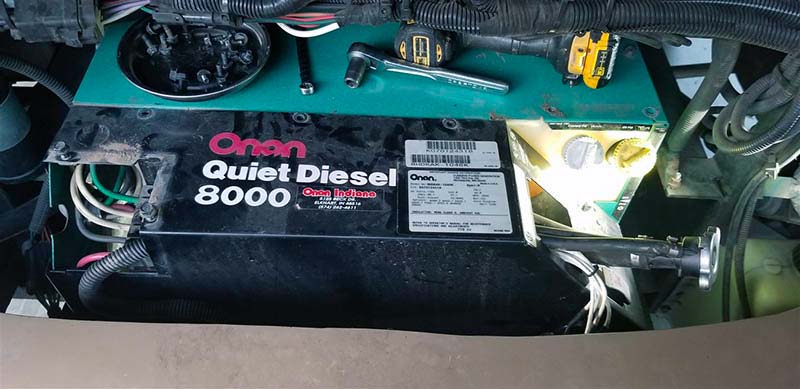
Although it seems counter-productive, the best thing RV owners can do to maintain their generators is to use them.
“We recommend operating generators under a load for an hour or two once a month,” said Chris. “Doing that works to lubricate parts and flush out all the old gas caught in the lines between the fuel tank and generator itself.”
How often to exercise the generator and for how long will differ by model, so Chris encouraged RVers to check their owner’s manual for specific directions. Putting a generator “under a load” means doing more than just letting it run. The generator should also be used to power equipment.
Putting a generator under a load can be as easy as running an air conditioner or turning on a space heater.
Fuel Additives in RV Generators
Fuel additives, whether it is STA-bil, Star Brite stabilizer or a product developed by Briggs & Stratton, can work to prevent fuel from degrading inside a generator.
Although those products help stabilize fuel for up to two years, Chris recommends limiting the time gas just sits to only one year. The products are also relatively expensive to protect large quantities of fuel with prices ranging up to $60 a gallon, which would be enough stabilizer to treat several tanks full of RV fuel.
“In portable generators, these kind of additives can help extend the useful life of fuel because the tank is often five gallons or less,” he added. “But a motorhome with an 80 to 100-gallon tank would require several bottles of the product.”
Fluid Analysis of an RV Generator
Because new generators, especially those operating on diesel fuel, cost around $14,000, Chris suggested having a fluid analysis conducted when buying a used RV.
“Take some oil from the generator and send it to the lab for inspection just to see if there is anything lurking inside which indicates the generator may have been damaged,” he explained. “However, many RVers who get a mediocre report back, often buy the RV anyway because the generator runs and sounds okay. But, after the sale, they don’t do anything with the generator and continue to use it until it stops working.”
“Because generators are so expensive to replace, it is really important to maintain the investment,” said Chris. “You cannot afford to let that thing sit and go bad due to a lack of maintenance.”
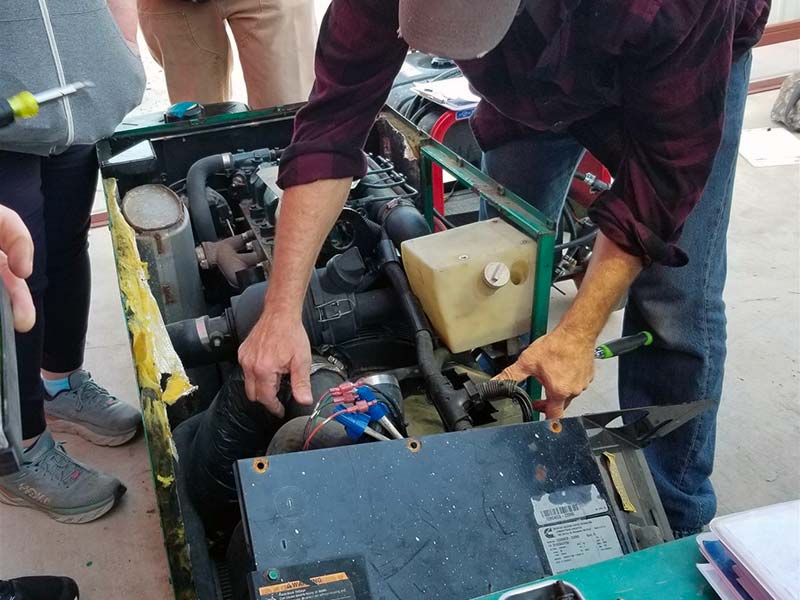
“It is challenging to replace a generator on an RV. Diesel generators can weigh up to 800 pounds and it’s going to take some skill to get the original device unmounted from where it was bolted in place,” he added. “Even smaller generators can weigh 300 pounds. It takes some effort to shoehorn a new one into place.”
RV Generator Safety Tip
Chris reminds RV owners that a generator is a separate engine which runs independently of the RV. Some RVs have an automatic generator start system that will kick in when battery levels fall too low. That can be problematic if the RV is parked indoors.
“The generator engine will create carbon monoxide fumes when running, especially in a closed area, like a garage,” he explained. “If you are going to store the rig inside for any period of time, just be mindful of the situation and disable the automatic start function.”
Chris also recommends people crawl underneath their RV to check the generator’s exhaust system. Sometimes rocks and road debris can fly up to create cracks or holes in the exhaust. That, too, can cause carbon monoxide leaks.
Get Training on RV Generators
Chris’ course at NRVTA is designed for professionals who want to learn to fix generators as well as RVers who simply want to make sure they have power available all the time.

Somewhere between 12 to 20 students attend his one-week class to learn about electric power generation. It features some basic information about electricity that would be useful for RVers to understand how generators work and why they don’t.
Best of all, the class features several hands-on labs to acquaint people with generators and their components. NRVTA also offers a basic RV Fundamentals class especially for RV owners. The course teaches skills to troubleshoot key RV systems including: DC electrical, AC electrical, propane, plumbing, RV refrigerators, air conditioners, water heaters and furnaces. RV owners also learn how to do basic maintenance procedures to keep them on the road.
To enroll in the class, call (903) 386-0444 to speak to an NRVTA student advisor.
Keeping your generator in top shape means more peace of mind and fewer interruptions to your RV adventures. A little maintenance goes a long way toward reliable power on the road.



Leave a Reply