
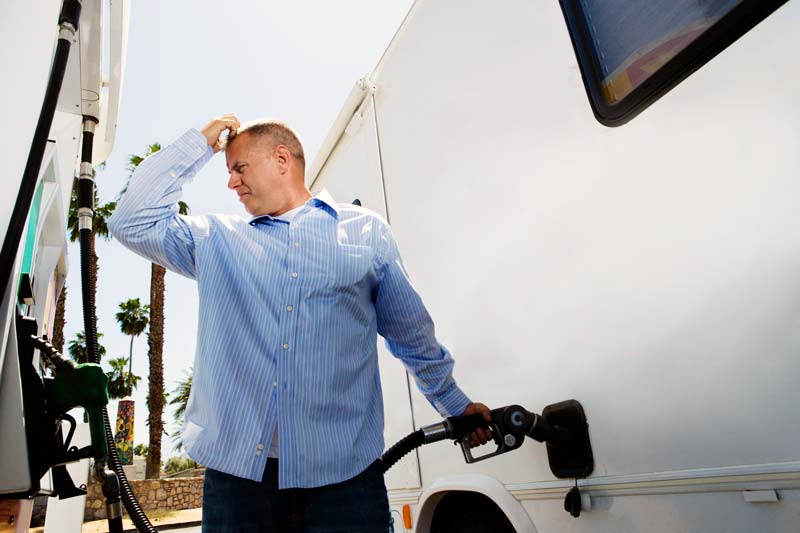
For many RVers, the freedom of the open road comes with a not-so-welcome companion: high fuel costs. With gas and diesel prices fluctuating wildly across the country, keeping an eye on the pump is just as important as watching the road.
Fortunately, experienced Workampers have discovered dozens of ways to save on RV fuel. From smart apps to simple driving tweaks, a few strategic changes can help you go farther for less. Every dollar saved at the pump is another dollar toward your next adventure. Here’s how to make it happen.
1. Know Where to Fuel Up
Start by using fuel-price apps like GasBuddy, Gas Guru, and Trucker Path to find the cheapest fuel near you. These crowd-sourced tools update in real time and are RV-friendly.
Looking to go a step further? Try Upside, a cash-back app that partners with thousands of fuel stations nationwide. You’ll earn money back on every gallon automatically.
Membership warehouse clubs like Costco and Sam’s Club can save you up to 50 cents per gallon, but RVers towing trailers or driving large motorhomes should scout locations in advance for accessibility.
Truck stops like Love’s are designed with RVs in mind. Their app offers fuel discounts and can help you locate truck-friendly locations. I regularly save 10 cents per gallon using the Love’s app.
2. Plan Your Route for Fuel Efficiency
Fuel efficiency starts before the engine even turns on. Planning your route can eliminate unnecessary miles, detours, and high-elevation climbs that burn more fuel.
Use tools like RV Life’s Trip Wizard to plan your journey and factor in fuel stops, elevation changes, and campgrounds.
Some RVers even use Google Maps’ “eco-friendly” route option, which suggests routes that use less fuel even if they take a few minutes longer. Apps, like Waze, can also suggest alternative routes. But beware, those apps do not take into account the height and turning radius of large RVs. RVers have reported these app will route them through residential areas to save a minute off the journey.
3. Drive Smart and Slow
Speed is the enemy of fuel economy. The U.S. Department of Energy reports that every 5 mph over 60 mph reduces fuel efficiency by up to 10%.
Use cruise control when possible to maintain consistent speed and reduce excess fuel consumption. For those hauling fifth wheels or travel trailers, consider adding a wind deflector on your truck cab to help channel the air over the trailer and reduce drag.
Bonus tip: Most RV tires aren’t rated for high-speed travel. Keeping it under 65 mph not only saves fuel, it’s safer, too.
4. Travel Light, Travel Smart
Weight matters. Every extra 100 pounds can reduce fuel economy, so lighten your load when you can. It’s easier to reduce weight than you might think. For instance, a gallon of water weighs nearly 8.5 pounds.
Here are a few suggestions:
- Dump holding tanks before hitting the road.
- Fill fresh water tanks partially, not fully, unless needed.
- Distribute weight evenly over the axles to avoid excess drag.
- Check tire pressure frequently for optimal rolling resistance.
5. Use Tech to Improve Fuel Habits
Want real-time feedback on your driving habits? Tools like the ScanGauge II and UltraGauge plug into your vehicle’s OBD-II port to display live MPG, throttle pressure, and more.
These insights help you:
- Drive more smoothly
- Avoid unnecessary acceleration
- Identify mechanical issues affecting fuel efficiency
6. Join Fuel Discount and Loyalty Programs
Fuel discount cards can be a game changer, especially for diesel rigs. The TechnoRV FuelSaver Card, for instance, offers savings of 10¢ to $1 per gallon at over 1,000 stations nationwide. It does include transaction and payment processing fees, so make sure to calculate the actual savings.
Other popular programs:
- Good Sam fuel discount
- Pilot Flying J RV Plus Card
- Love’s Connect
- TDS Open Roads
Most of these cards work at truck lanes, which are often more accessible for large RVs.
7. Stay Longer, Drive Less
When I was full-timing, I moved every three to five days. In hindsight, I could have saved significantly by staying in one place longer.
Workampers who reduce travel frequency save not only on fuel but also campground fees. Many full-timers tow a small car for sightseeing. Others save both fuel and wear-and-tear on their RV by relying on electric bikes for short trips, grocery runs, or exploring local trails.
Camp hosts can often point you to the cheapest local fuel spots, too. And some RVers swear by filling up in the morning when fuel is denser due to cooler temperatures.
Final Thoughts
Rising fuel costs may be inevitable, but they don’t have to derail your RV adventures. With a little planning, smarter habits, and the right tools, you can stay on the road without blowing your budget.
Life on the road should be about freedom, not frustration, and every dollar saved at the pump brings your next adventure one step closer.



Leave a Reply