

Most Workampers spend plenty of time planning where they’ll travel, where they’ll stay and when they’ll arrive. But one important detail that often gets overlooked until payday is banking.
You may not think twice about your bank if you’ve only taken short RV trips, but Workamping means you’ll be spending a season in a new, potentially remote location.
After arriving at a new Workamping job, you could discover your employer still issues paper paychecks, your bank doesn’t have a nearby branch or ATM, or cell service isn’t reliable enough to deposit a check with your phone. Suddenly, what should be a simple banking task becomes an unexpected hassle.
Managing your banking while Workamping isn’t difficult, but it does require a little more planning than when you lived in one place. Fortunately, most banking headaches can be avoided by planning ahead.
Building a simple banking system before you leave home will make it much easier to get paid, access your money and handle unexpected situations wherever your travels take you.
Why Banking Can Be More Complicated for Workampers
Many Workamping jobs are located in the very places that make the lifestyle so rewarding like beautiful national parks, small resort towns, mountain communities and other scenic destinations. While those locations are part of the appeal, they often come with fewer banking conveniences than you’re used to.
Instead of having several banks and dozens of ATMs nearby, you may find only one small local bank with limited hours or discover that the nearest branch of your financial institution is an hour away. If you’re relying on paper paychecks, depositing or cashing them may take more planning than expected.
Travel itself can create additional challenges too. Logging into your bank account from different states, making purchases as you travel across the country or moving to a new location every few months can occasionally trigger fraud monitoring or security alerts.
Receiving important mail, such as replacement debit cards or account notices, also requires more planning when you’re using a mail forwarding service or frequently changing locations.
Fortunately, these challenges are easy to overcome with a little preparation.
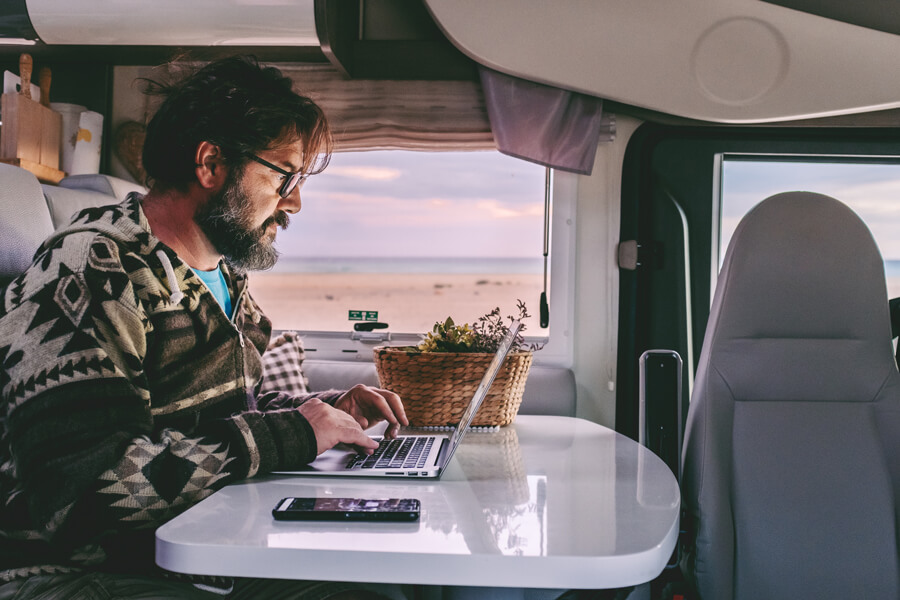
Making Banking Easier While Workamping
Whenever Possible, Choose Direct Deposit
One of the easiest ways to eliminate many banking headaches is through direct deposit.
When employers deposit wages directly into your bank account, it eliminates the need for check-cashing services, long drives to distant bank branches, or depositing checks through mobile apps when you have poor cell signal.
Plus, your money is usually available sooner and you won’t have to worry about where to deposit a paycheck before moving to your next destination.
Today, many larger Workamping employers already use direct deposit as their standard payroll method. However, some smaller campgrounds, family-owned businesses and seasonal attractions may still issue paper checks.
That makes payroll an important topic to discuss before accepting a position. A simple conversation about whether you’ll receive direct deposit, paper checks or another payment method helps eliminate surprises after arriving at a new job.
Ask Questions Before Taking a Workamping Job
Payroll and banking should not be the first topics discussed during a job interview, but they still deserve a place in the conversation.
Before accepting a seasonal position, consider asking these practical questions:
- Is direct deposit available? If not, are paper checks issued or will you be paid in cash?
- Are employees paid monthly, weekly, every other week or on another schedule?
- Is the work location especially remote?
- Where is the nearest ATM or banking facility?
- How reliable is cellular or internet service for accessing online banking?
Knowing those answers before arriving lets you to prepare accordingly rather than try to solve problems after the season begins.
For a list of other important topics to discuss during a Workamper interview, read Questions to Ask Workamper Employers To Set Clear Expectations.
Access Your Money from Anywhere
One of the biggest adjustments for new Workampers is realizing they can’t rely on a neighborhood bank branch. Fortunately, today’s online banking tools make it possible to manage nearly every aspect of your finances from wherever your RV is parked.
Many Workampers place recurring expenses, such as insurance, phone service and streaming subscriptions, on automatic payment to avoid missing due dates while traveling.
Mobile banking apps allow customers to deposit checks, transfer money between accounts, pay bills, monitor balances and receive fraud alerts without ever visiting a branch.
Many banking apps also let you temporarily lock or unlock debit or credit cards, review recent transactions and receive instant notifications whenever purchases occur.
Choosing the right financial institution is just as important as using the right technology. A one-size-fits-all approach doesn’t work for every Workamper.
Some people prefer national banks with branches across the country, while others appreciate credit unions that participate in shared branching networks.
Online-only banks have also become popular because nearly every routine transaction can be completed through a website or mobile app.
ATM access is another important consideration. Some financial institutions operate extensive ATM networks, while others reimburse customers for fees charged by out-of-network machines. If you frequently travel to rural areas, it’s worth considering how easily you’ll be able to withdraw cash when you need it.
Some experienced Workampers even maintain accounts with more than one financial institution. They may use one account for everyday banking and another that offers broader ATM access, stronger mobile banking features or simply serves as a backup while traveling.
Reliable internet access is part of the equation too. Mobile check deposits and other online banking tasks require a stable connection, and some remote campgrounds may have limited cellular service or Wi-Fi.
The best banking system is the one that fits your travel style. Whether you prefer a national bank, a credit union or an online institution, the goal is the same: choose tools that let you access and manage your money wherever the road takes you.
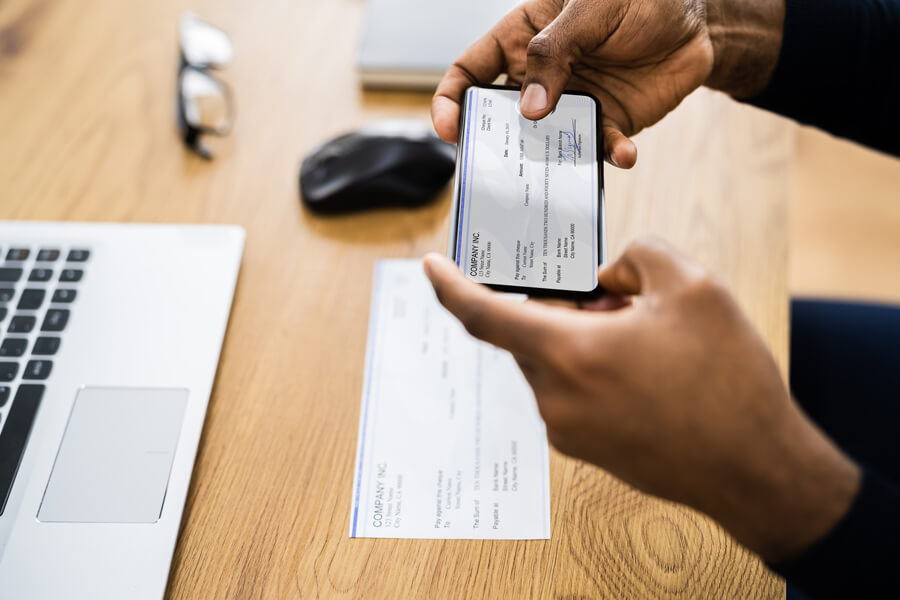
Prepare for the Unexpected
Even with the best online banking setup, unexpected situations can happen. Thinking ahead now can save a lot of stress later. Here are some tips to ensure your future trips go smoothly.
Keep Some Emergency Cash
Although electronic payments continue to dominate daily life, cash remains useful in many parts of the country. Small local businesses, roadside markets or local events may prefer or only accept cash, and small towns sometimes have limited ATM availability.
Repeatedly using out-of-network ATMs can become surprisingly expensive. Individual withdrawal fees may seem minor, but they add up over an entire season.
Many grocery stores, big-box retailers and pharmacies allow customers to receive cash back with a debit card purchase, although some locations now charge a small fee for that convenience.
Planning ahead helps minimize those costs. Withdraw cash before arriving at particularly remote destinations and research nearby ATM locations before accepting an assignment so you know what services will be available after arrival.
Keeping a reasonable emergency cash reserve also provides peace-of-mind should electronic payment systems become temporarily unavailable.
Backup Plans Matter More on the Road
Perhaps the biggest lesson experienced Workampers learn is never to rely entirely on a single payment method.
Debit and credit cards can become misplaced, damaged, or stolen, and fraud protection systems occasionally freeze accounts or cancel your card entirely.
These situations are inconvenient anytime they occur, but they become far more stressful in remote areas where replacement options may be limited.
Be sure to maintain a small cash reserve and a backup credit card available for emergencies in a safe spot in your RV.
A little preparation won’t prevent every problem, but it can keep a minor inconvenience from becoming a trip-ending headache.
Managing Important Mail from the Road
When your home is on wheels, receiving mail takes a little more planning. That’s why many full-time Workampers use a professional mail forwarding service to receive correspondence, scan envelopes and forward important mail to their current location.
While these services make life on the road much easier, they can also add several days, or even weeks, to the delivery process. That isn’t usually a problem for routine mail, but it can be when you’re waiting for something important, like a replacement debit or credit card.
Pay attention to your card expiration dates and think ahead about where you’ll be staying when new cards are scheduled to arrive. If you’ll be traveling or changing jobs around that time, ask your bank whether they can mail your replacement card early or hold it until you have a more permanent mailing address.
It’s also important to keep your bank updated with your current phone number, email address and mailing information. If suspicious activity is detected or the bank needs to verify a transaction, being able to reach you quickly can prevent unnecessary delays or frozen accounts.
A little planning goes a long way. Knowing where your important banking mail will be sent, and when you’ll be there to receive it, can save a great deal of frustration while you’re on the road.
Preparation Leads to Peace-Of-Mind
Banking while Workamping doesn’t have to be complicated. Like many parts of the RV lifestyle, success comes down to planning ahead.
Before heading to your next Workamping assignment, spend some time building a banking system that fits the way you travel. A little planning now can help ensure payday, and every day after, is one less thing to worry about on the road.
For more practical tips on preparing for life as a Workamper, browse additional RV lifestyle resources and current Workamping opportunities at Workamper.com.



Leave a Reply