
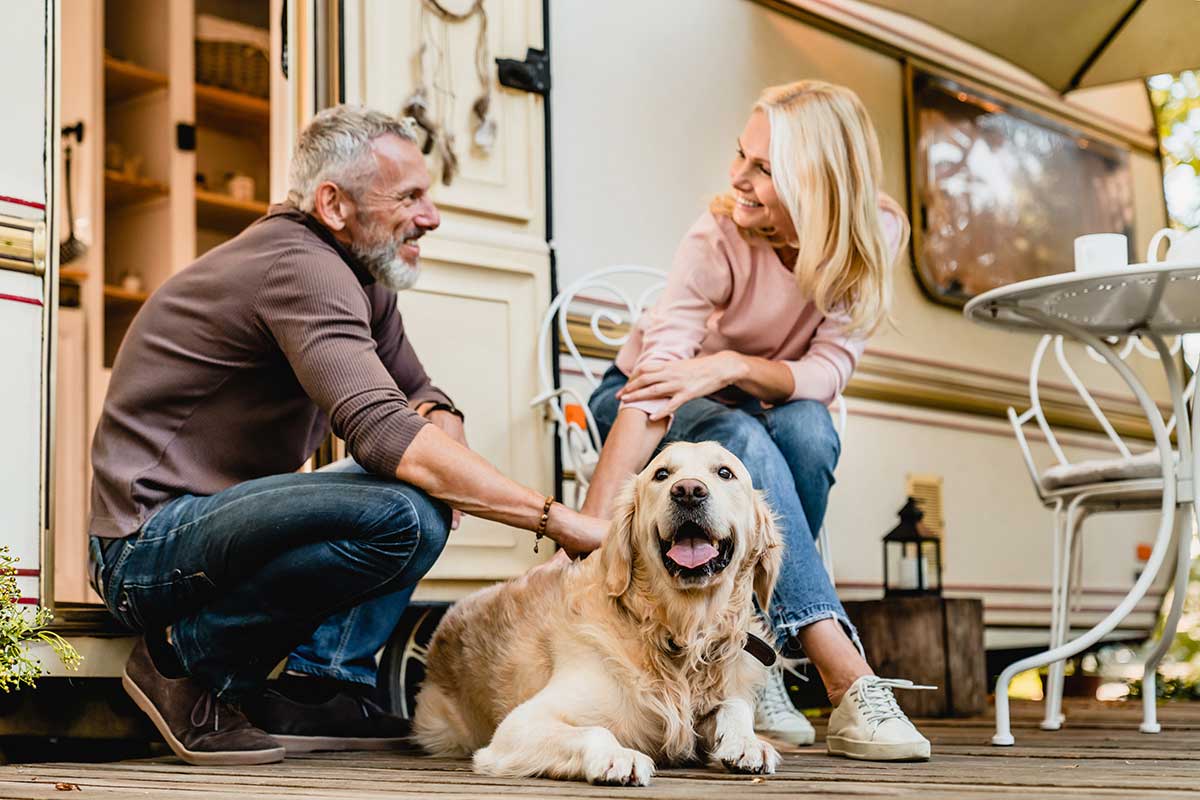
For many RVers, pets are part of the family. So, it’s no surprise that one of the first questions aspiring Workampers ask is, “Can I bring my pet with me?”
The answer is usually yes, but traveling and workamping with pets requires a little more planning than many newcomers expect.
The good news is that plenty of Workampers successfully travel with dogs, cats and other companion animals. The reality, however, is that pets influence nearly every aspect of choosing a Workamping job. They affect where you can work, how long you can be away from your RV and even whether an employer offers you a position at all.
Fortunately, traveling with pets is entirely possible when owners plan ahead, communicate honestly and accept the responsibility that comes with bringing animals along for the ride.
Do All Workamper Employers Allow Pets?
Most employers understand that pets are often part of the equation and they routinely hire Workampers who travel with one or two well-behaved dogs or cats.
That does not mean every employer allows pets or has the same policies.
Some employers may limit the number of pets allowed or restrict certain dog breeds because of insurance requirements. Others simply cannot accommodate pets because of the nature of the property or the work involved.
Always ask about pet policies before accepting a position rather than assuming every employer has the same rules. Just as important, be completely honest about having pets during the interview process.
Are Some Workamping Jobs More Pet-Friendly Than Others?
Yes, but it’s less about the type of job and more about the work schedule. As such, not every Workamping position works equally well for pet owners.
Jobs with flexible schedules or shorter shifts make it easier to return to the RV throughout the day, while positions with longer shifts or short breaks will create challenges for pets that need frequent potty breaks or regular exercise.
Workamping couples frequently have an advantage because one person may finish work before the other or work opposite shifts, reducing the amount of time pets spend alone.
Solo Workampers may need to think more carefully about daily schedules, especially if traveling with younger or more active pets.
Understanding daily routines ahead of time helps avoid unpleasant surprises after arriving, so before accepting any position, ask questions such as:
- How long are typical shifts?
- Will both Workampers usually work at the same time?
- Are lunch breaks long enough to return to the RV?
- Are schedules consistent from week to week?
- Are there recommended dog walkers, doggy daycares, or pet sitters?
Does Your Pet’s Behavior Matter?
Yes, your pet’s behavior absolutely matters. Typically, employers are less concerned about whether you have a pet and more concerned about how that pet behaves.
A quiet, friendly dog that stays leashed and greets people politely creates very few problems. A dog that barks nonstop whenever its owner leaves, lunges at other dogs or runs loose around the campground quickly becomes everyone’s concern.
The same applies to cats that roam freely through neighboring campsites or pets that repeatedly disturb wildlife.
One poorly behaved animal can generate complaints from guests, coworkers and neighboring campers. Even worse, if an employer has a negative experience with a Workamper’s uncontrolled pet, the next applicant traveling with animals may face additional scrutiny because of someone else’s poor behavior.
Do Workampers Have To Follow The Same Pet Rules As Guests?
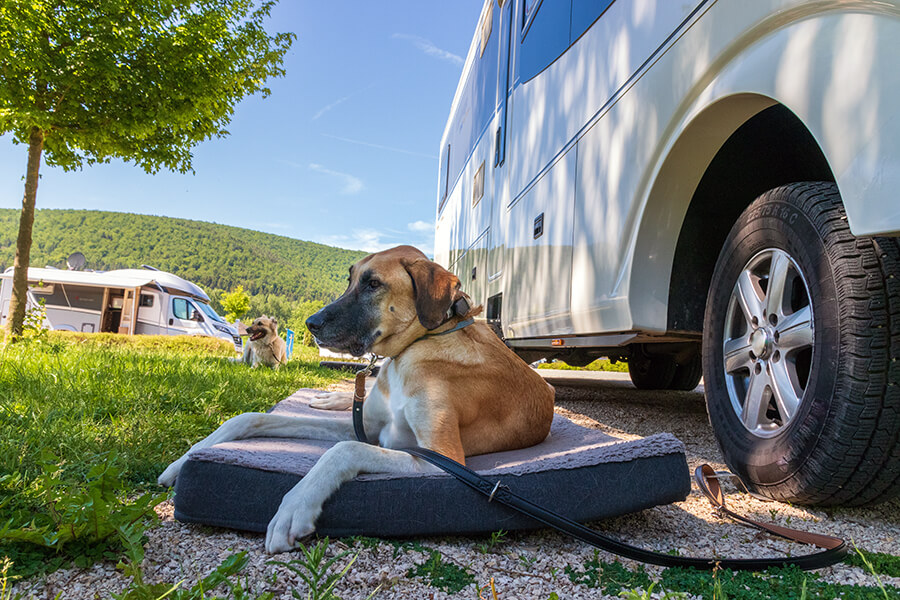
Yes, everyone typically follows the same pet rules, whether they are a customer or an employee. Pet rules exist for good reasons and Workampers should model them rather than act as if they don’t apply to them.
If visitors are reminded to leash their dogs while Workampers allow theirs to roam freely, it creates frustration and undermines the campground’s credibility.
Most employers have reasonable pet rules such as:
- Pets are to remain on a leash unless they are inside designated off-leash areas.
- Pet waste should be picked up quickly and properly disposed of.
- Excessive barking and digging around campsites and landscaping is prohibited.
- Aggressive behavior towards people or other animals is prohibited which is especially important as this can expose employers to liability concerns.
Are Cats Better Than Dogs For Workampers?
No, one type of pet is not better than another; they each bring their own unique challenges.
Dogs generally adapt well to outdoor adventures and campground life, but they also require considerably more daily attention than cats. Regular walks, exercise, outdoor breaks and playtime become part of every dog owner’s daily schedule, regardless of weather.
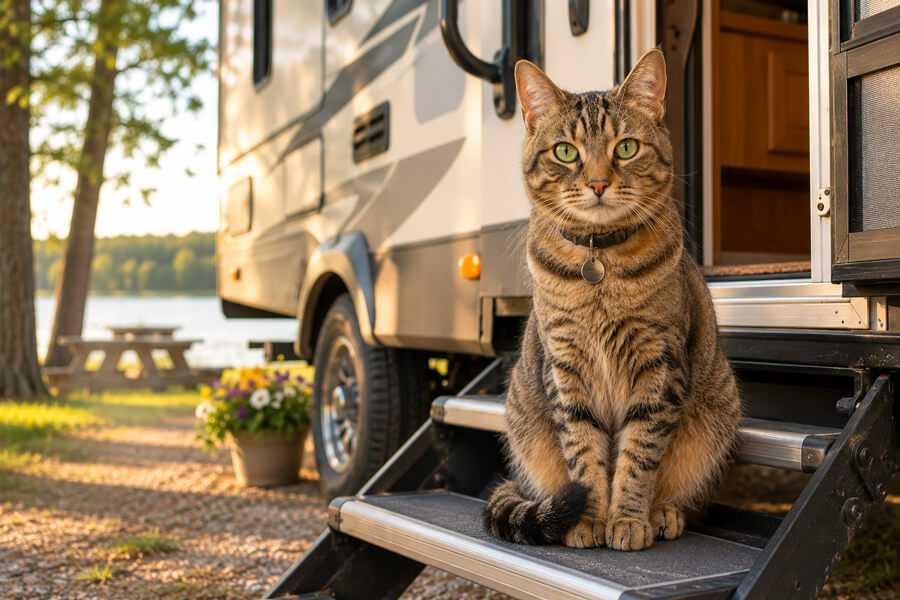
Cats adapt well to RV living but every animal is different. Some cats may become stressed by frequent travel or changes in routine, just as some dogs do. Although cats typically require less effort, they still need stimulation, scratching areas, and places where they feel secure inside a relatively small living space.
Litter boxes also require some planning in an RV. Finding a convenient location, controlling odors and keeping litter from being tracked throughout a small living space are common challenges for traveling cat owners.
Other pets, such as birds, fish and reptiles, may actually be easier to care for once you’re parked, but travel days may be a bit more problematic due to the bumpy, jarring movement associated with transporting your home on wheels.
Only you can decide what number and type of pets you can handle while living in your RV.
Can I Workamp With Multiple Pets?
Usually, yes. Some employers may have a one pet limit, but many employers readily accept two or more pets. However, traveling with several animals naturally creates additional considerations.
Multiple dogs require more exercise, produce more noise and increase the chance that one may react to other animals or campground activity and create a chain reaction of barking.
More pets also mean additional veterinary expenses, more time commitments to their care, larger food storage needs and greater space requirements inside the RV.
For dreamers considering full-time RV living, beginning with one pet is often considerably easier than managing several, but even one pet can be a challenge.
Years ago, when I was a solo Workamper, many people recommended I get a dog to accompany me on my travels. It seemed like a good idea, so after a quick visit to a shelter, I came home with a docile and cuddly little guy named Buddy.
While he was very calm and well-mannered at the shelter, after moving into my RV, he would frequently howl, race all around inside, and dig up the campsite when he was unattended outside.
To make matters worse, he chewed through every wire underneath the seats as well as every extension cord and cable he could find, once even giving himself a tremendous shock.
I reached my breaking point and decided he would live out the rest of his days with one of my daughters after he pooped right on my motorhome dashboard.
The bottom line is some pets just do not have the temperament to be confined all day to 400 square feet of space, or less.
How Does Weather Affect Pets While Workamping?
Seasonal temperatures affect pets just as much as people, and summer presents the greatest concern.
An RV can become dangerously hot within minutes if electrical power fails or an air conditioner stops working. Owners should never assume campground electricity will always remain uninterrupted.
Winter creates different concerns. Ice, snow and cold pavement may require shorter walks, protective paw coverings or additional indoor exercise.
Many experienced Workampers use remote temperature monitoring systems, such as Waggle, which can send alerts to your mobile phone if temperatures inside the RV become unsafe or power is lost. While no technology replaces responsible supervision, these systems can provide valuable peace of mind when pets must remain inside during work hours.
Finally, extreme weather can happen anytime, anywhere. Be sure you are familiar with your employer’s emergency procedures and have a safe way to contain or restrain your pet in a shelter shared with other people and dogs during what could be a very stressful situation.
Regardless of season, employers appreciate Workampers who have realistic plans for keeping their pets comfortable and safe.
How Do You Handle Veterinary Care While Workamping?
Medical emergencies rarely occur at convenient times, so, before arriving in a new area, identify nearby veterinary clinics, emergency animal hospitals and after-hours providers.
Be sure your pets’ licensing, vaccinations and microchip registration are up to date, and check local requirements before arriving in a new area.
Maintain an adequate supply of prescription medications rather than waiting until the last few doses remain and keep a basic pet first-aid kit stocked up and accessible.
How Do You Find Pet-friendly Workamping Jobs?
When employers submit Job listings on Workamper.com, they are required to list whether pets are allowed. This makes it super simple for our members to search the current job listings for pet-friendly Workamping jobs.
When reviewing job listings elsewhere, look for employers that specifically mention being pet-friendly or invite applicants traveling with pets.
During interviews, discuss your animals openly. Describe their breed, age, temperament and training. Employers often appreciate hearing that a dog has completed obedience training or that a cat remains exclusively indoors.
Those conversations build confidence that you understand the responsibilities of traveling with animals.
Do not tell an employer you have one dog if you actually travel with three. Do not leave your cat out of the conversation because “it’s just a cat.” The same applies to other types of pets, like reptiles, gerbils, birds and other confined animals.
Few things damage trust faster than arriving on your first day with undeclared animals. Most employers appreciate honesty and simply want to determine whether their opportunity is a good fit for both you and your pets.
Enjoying The Workamping Lifestyle With Pets
For many Workampers, pets make every destination feel more like home. They provide companionship, encourage socialization after work and become part of countless travel memories. But they also require thoughtful planning.
Employers are usually happy to work with pet owners who communicate honestly, respect campground rules and ensure their animals remain good neighbors.
When pets are well behaved and their owners lead by example, everyone benefits, including the employers who continue welcoming animal-loving Workampers season after season.
With the right preparation and a little extra planning, there’s no reason your four-legged travel companion can’t be part of your next Workamping adventure!



Leave a Reply